← All research
Ongoing

Decarbonization solutions for buildings in Hong Kong: development, assessment and deployment

Hong Kong Research Grants Council, Strategic Themes Grant (RGC-STG)Team member2024 to 2028

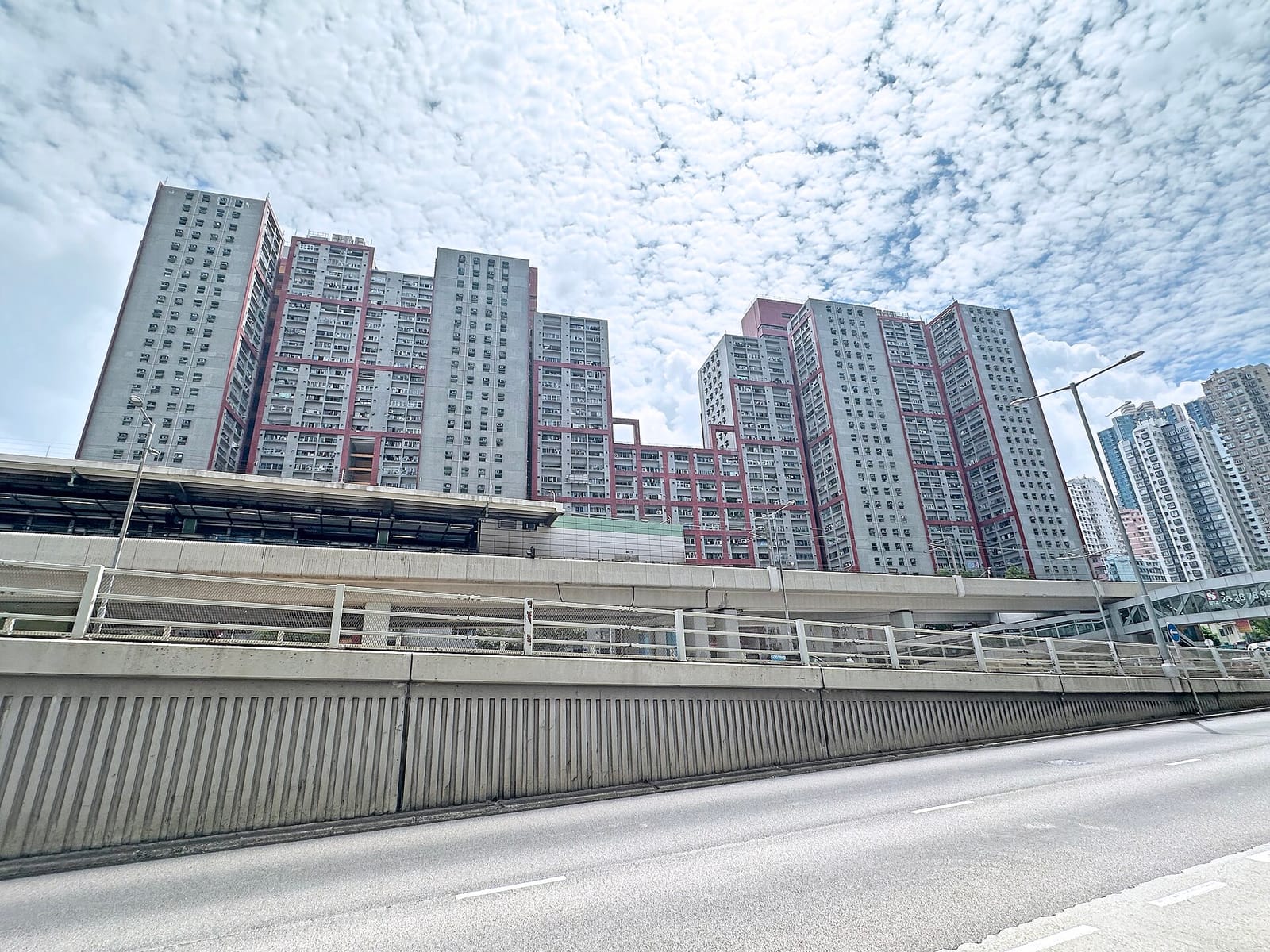
Kwun Tong Garden Estate, Hong Kong

Qwer132477, CC BY 4.0, via Wikimedia Commons

About the project

Buildings are the single most important contributor of carbon emissions in Hong Kong (HK) as they account for 90% of the electricity consumption and 60% of the total carbon emissions of the city. Hence, decarbonization of HK’s building infrastructure is inevitable and plays a dominant role in achieving carbon neutrality before 2050. The main source of buildings’ energy consumption and carbon emissions is the so-called Operational Energy and Carbon (OEC), which is generated from lifetime use of cooling facilities (e.g., ventilation and air-conditioning). Building decarbonization relies on efforts from all stakeholders and depends heavily on what new technology options will be chosen and eventually be developed into more reliable and cost-effective ones suitable for largescale application in HK. Unfortunately, the HK’s Climate Action Plan is silent on which technologies we aim to develop and how to implement them territory-wide under government-led policies and regulations. This proposed project has the following two objectives:

Objectives

01

To identify and develop promising building technologies according to their efficacy and viability, for maximizing carbon reduction and energy efficiency, applicable for both existing and new buildings in HK, and to significantly reduce OEC towards a carbon neutral HK by 2050.

02

To integrate the developed innovative technologies with net-zero policies and regulations in the built sector, and to provide a feasible and accountable roadmap to the HK government for implementation, from lab-scale prototypes to real-size demo flats and eventually to city-scale deployment.

We have formed a team of leading experts in environmental and mechanical engineering, material science and engineering, and public policy from HKUST/PolyU/CityU along with key stakeholders (HK Environmental Protection Department and Green Building Council) to develop, assess, and deploy innovative technologies and solutions for buildings in HK. We will take a systems-based and problem-driven collaborative approach, and we will incorporate smart energy-saving building envelopes, advanced cooling materials and green air-conditioning systems into the larger social, economic, political and technological context of HK towards building decarbonization. The goal of this project is to provide evidence-based solid engineering solutions and policy and regulatory recommendations for HK to realize building decarbonization. The research will advance the existing knowledge and hardware-software for building sector, promote a reshaping of the building industry of HK and eventually establish HK as an international center of excellence in this field. The project outcome will also be applicable to heavily urbanized cities in mainland China and worldwide.

Outputs

2025

Ludovice, N.P., Matus, K., Redonnet, S., Xuan, Z., Zhang, Y., Loh, E., Zhang, Y., & Chow, J.

Towards a holistic and reflexive assessment of green buildings and technological landscapes in Hong Kong

Energy Research and Social Science, 127, 104235.

Green buildingsEnvironment and technologyHistory and policydoi:10.1016/j.erss.2025.104235
Abstract

The selection of sustainable technologies is a critical challenge in the global pursuit of decarbonisation, yet prevailing models often privilege technical and economic metrics at the expense of contextual nuance and stakeholder diversity. This article advances a holistic and reflexive assessment framework for technology selection, foregrounding the integration of technical, economic, environmental, and social criteria, and embedding the perspectives of end-users and local regulators within the evaluative process. Through a case study of green building technologies in Hong Kong, a city marked by dense urban form, regulatory complexity, and climatic specificity, the framework is applied to a spectrum of technologies, including insulation, paints, windows, lifts, and HVAC systems, across both retrofit and new construction scenarios. The findings reveal that technology selection, when attuned to local infrastructural, regulatory, and cultural conditions, not only enhances technical viability but also fosters social legitimacy and accelerates adoption. This approach transcends conventional expert-driven models, offering policymakers and practitioners an adaptive, user-centred, and reflexive methodology that is responsive to the evolving priorities of urban sustainability. While the present study constitutes an initial, expert-led assessment, it establishes a foundation for future participatory and iterative processes, ultimately aiming to democratise technology selection and align it with the lived realities of diverse urban communities. In so doing, the research contributes a novel, context-sensitive paradigm for sustainable building practice, with implications for decarbonisation strategies in cities worldwide.